The Impact of 5G on the Future of Networked Vehicles
Read Time:2 Minute, 43 Second
As technology advances at breakneck speed, the car industry is experiencing a major shift toward electrification, automation, and constant connectivity. Central to this change is fifth-generation wireless technology, or 5G. In this expert piece, we examine how 5G underpins the future of connected vehicles, assessing its effects on vehicle communications, safety, entertainment, and the driving experience as a whole.
The Evolution of Automotive Connectivity
From 2G to 5G
Vehicle wireless capabilities began with 2G for simple calls and texts. Gradually, the sector moved through 3G and 4G LTE, which introduced basic data services. 5G, however, marks a substantial advance—delivering extremely fast speeds and minimal latency tailored to the rigorous demands of connected mobility.
Bandwidth and Speed
Compared with earlier generations, 5G provides much greater bandwidth and quicker data transfers. This allows vehicles to share large datasets instantly, supporting applications from sophisticated driver aids to uninterrupted high-definition media streaming.
Enhancing Vehicle Safety
V2X Communication
A key contribution of 5G to connected cars is Vehicle-to-Everything (V2X) communication. This enables cars to interact not just with one another (V2V) but also with infrastructure (V2I) and pedestrians (V2P). Thanks to 5G’s low latency and dependable links, V2X can help prevent collisions, smooth traffic, and raise road safety standards.
Advanced Driver Assistance Systems (ADAS)
5G supports the integration of advanced driver assistance features like adaptive cruise, lane-keep systems, and automatic emergency braking. These functions depend on live sensor inputs and V2X exchanges to boost safety and lower accident risk.
Transforming the In-Car Experience
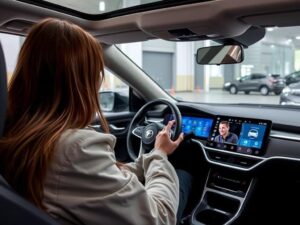
Infotainment and Streaming
By supplying the necessary throughput for high-resolution streaming, 5G transforms in-vehicle entertainment. Occupants can stream films, music, and even immersive VR content while traveling, making journeys more enjoyable and engaging.
Over-the-Air (OTA) Updates
With robust 5G links, manufacturers can roll out OTA updates quickly and reliably. Cars can receive software improvements, fixes, and new capabilities remotely, cutting down service visits and keeping vehicles current with the latest features.
Autonomous Driving and Machine Learning
Real-time Data Processing
Self-driving vehicles depend on continuous inputs from cameras, sensors, and other sources to act instantly. 5G’s fast, low-latency connections make real-time processing possible, enabling autonomous systems to handle complex scenarios and adapt to evolving road conditions accurately.
Edge Computing
5G also enables edge computing, where information is handled on-board or at nearby network nodes. This lessens dependence on distant cloud servers, speeds up decision-making, and can improve the privacy and security of vehicle data.
Challenges and Considerations
Infrastructure Deployment
Broad 5G use in connected vehicles depends on extensive infrastructure build-out, including many base stations and wider coverage. Carmakers and telecom operators must work together to deliver consistent network availability.
Data Security and Privacy
As cars grow more networked, protecting the data sent over 5G becomes critical. Strong encryption and cybersecurity practices are required to safeguard sensitive information and block unauthorized access.
Conclusion
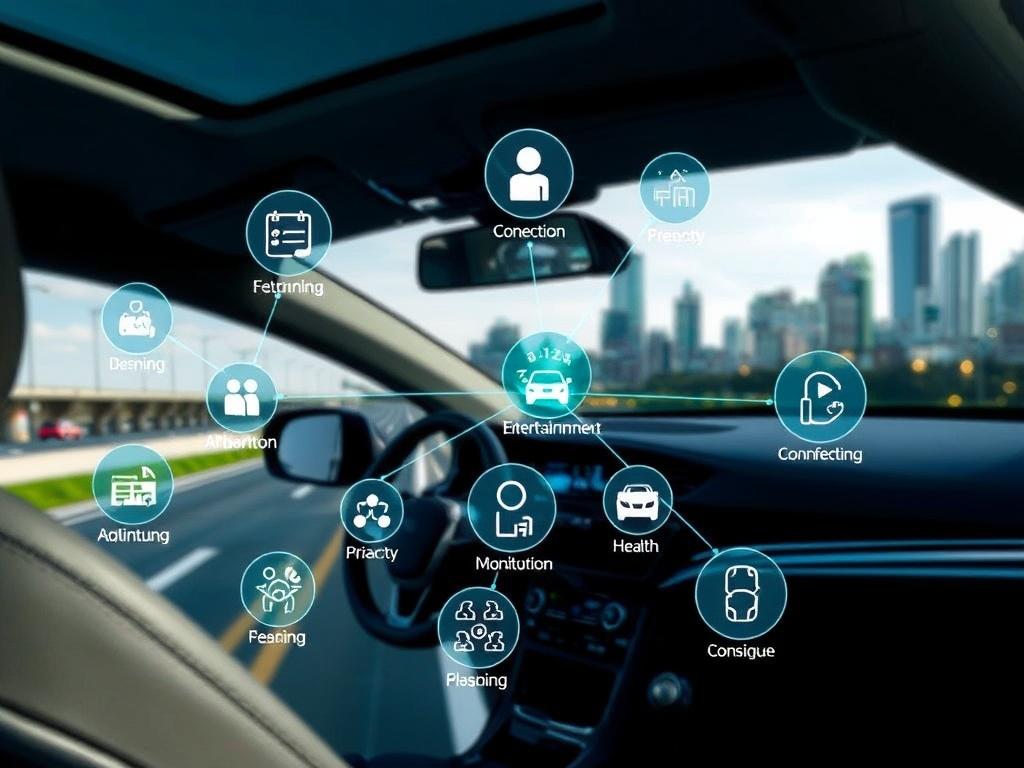
5G is reshaping the future of connected vehicles, bringing unprecedented levels of connectivity, safety, entertainment, and automation. With ultra-fast throughput, minimal latency, and dependable links, 5G forms the foundation of next-generation cars. As automotive technology advances, 5G will be central to crafting a driving experience that is safer, smarter, and more enjoyable for everyone.


Happy
0 %

Sad
0 %

Excited
0 %

Sleepy
0 %

Angry
0 %

Surprise
0 %
 0
0
 0
0