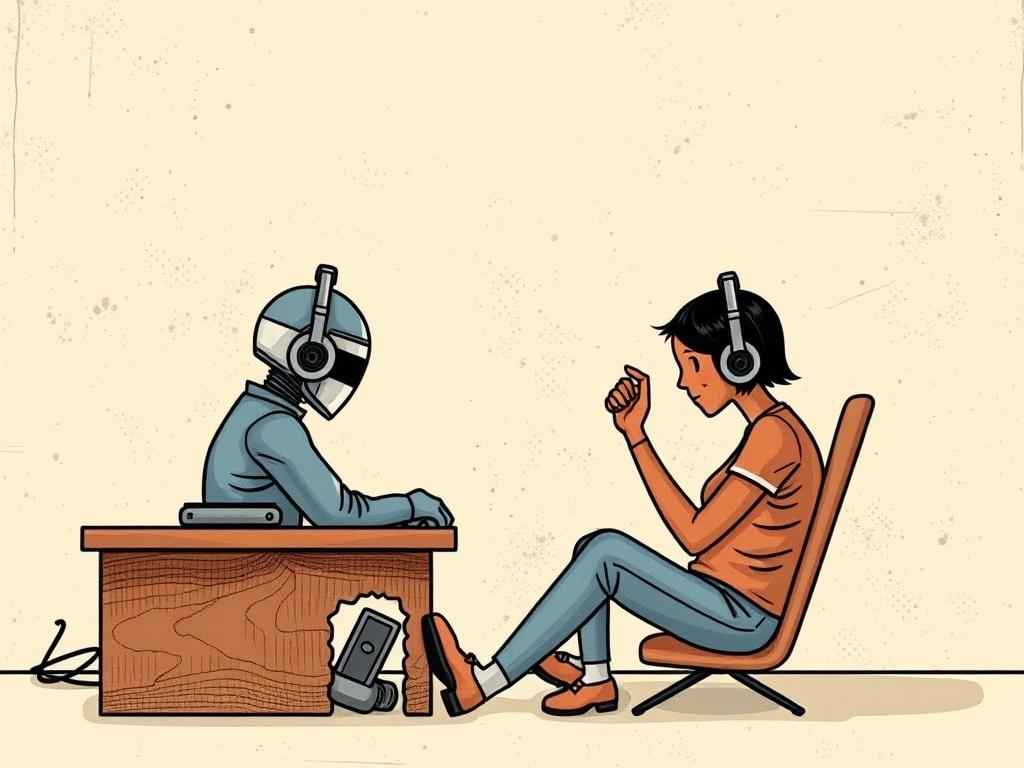
The messy upgrade: how technology helps and hurts daily life
Read Time:5 Minute, 36 Second
We keep circling the same question at dinner tables and in group chats: Is Technology Making Life Worse? The honest answer shifts depending on what you measure, and whose day you’re measuring. Technology gives us astonishing reach and speed, yet it often tugs at our attention and trims the margins where rest and reflection used to live.
Speed, convenience, and the quiet tax we pay
Convenience is technology’s headline feature. Groceries arrive in an hour, rides show up in minutes, and the thermostat learns our schedule while we sleep. But speed carries a quiet tax: when everything is easy to start, it becomes hard to stop, and we end up accepting more tasks than any normal day can hold.
Last year I started ordering meals through an app to reclaim weeknight time. I saved twenty minutes of cooking, then immediately spent thirty checking work messages I wouldn’t have opened if I’d been chopping onions. The time savings were real; the redistribution of attention was, too.
Even micro-waits—standing in line, waiting for the train—have been paved over by quick taps. That seems efficient until you realize those small pockets once gave your mind a breather. Now the day runs as one unbroken sprint, and we wonder why we feel winded by dinner.
What screens do to attention and mood
Phones and platforms are built to reduce friction, which is great for access and terrible for boundaries. Infinite feeds and push alerts invite us to graze all day, eroding the ability to do sustained work or even sustained rest. Heavy, late-night scrolling is consistently linked with worse sleep and crankier mornings, a trade-off that rarely feels worth it at 6 a.m.
I noticed my own mood lift after a simple change: I turned off autoplay and moved social apps to a folder on the last screen. The urge didn’t vanish, but the extra two taps added just enough intention. That small speed bump gave me back a few quiet stretches, the kind where ideas often show up uninvited.
- Batch notifications so they arrive a few times a day instead of constantly.
- Keep the home screen boring; let the useful tools be easy and the temptations slightly far.
- Protect sleep with a hard stop: no screens an hour before bed and no phone in the bedroom.
Where tech helps and where it stings
Trade-offs aren’t abstract; they touch daily life in concrete ways. A quick snapshot makes the pattern clear: almost every gain shadows a new risk. Seeing them side by side helps you decide which swaps you’re willing to make.
| Domain | How tech helps | How it can hurt |
|---|---|---|
| Work | Remote access, flexible hours, global teams | Always-on expectations, shallow multitasking |
| Health | Telemedicine, wearables, instant information | Overtracking, anxiety from constant data |
| Relationships | Easy connection across distance | Distraction in person, performative posting |
| Privacy | Smart services tailored to you | Data collection, targeted manipulation |
None of this says “good” or “bad” in absolute terms. It says the settings matter, the norms matter, and our habits matter most of all. Tools shape behavior, but behavior also shapes what tools are built next.
Work without walls: productivity or burnout?
Remote and hybrid work have proven their worth: fewer commutes, wider hiring pools, flexibility for parents and caregivers. Yet the same tools that free us from the office can steal our focus with pings, replies, and calendars tiled like bathroom grout. As a project manager, I watched productivity surge when we set two daily “quiet blocks” and stopped measuring speed by how fast someone answered a chat.
The healthier teams I’ve seen agree on communication lanes—email for non-urgent, chat for quick coordination, docs for decisions—and stick to them. They make deep work the default and availability the exception. That’s not Luddite; it’s disciplined use of powerful tools.
Information overload and trust
Algorithms are very good at finding what keeps us staring, which isn’t always what keeps us informed. Highly shareable content crowds quiet, careful reporting, and people end up consuming a highlight reel of outrage. Local newsrooms, which help communities make sense of school budgets and zoning maps, struggle for attention in that environment.
A better information diet is boring in the best way: follow primary sources, subscribe to a solid local outlet, and set actual times to catch up instead of grazing. When I started reading news in two short windows—morning and late afternoon—I felt less yanked around by the day’s drama and more able to act on the parts that touched my life.
Designing a better relationship with our tools
Tools aren’t destiny; defaults nudge us one way, but we still steer. Thoughtful design can line up with human limits, not plow through them. A calendar that protects focus by default, an app that asks “Are you sure?” before autoplaying the next hit of novelty—those small design choices add up.
There’s work to do at three levels: personal, organizational, and civic. Individually, we can set guardrails and reward ourselves with the attention we save. Teams can normalize response-time expectations and choose fewer platforms. Policymakers can support transparency around data and give users real control without needing a computer science degree.
- Make a weekly “tech budget”: what gets your prime hours, what gets the scraps.
- Delete one nonessential app each month and see what you miss a week later.
- Use analog backups—paper notes, a kitchen timer—when you need ironclad focus.
- Buy tools that respect you: no dark patterns, clear privacy controls.
A quick litmus test before a new app
Before installing anything, I ask what problem it solves and what problem it might create. If it saves me five minutes but adds ten new decisions a day, I pass. If it makes a good habit easier—reading, moving, reaching out to a friend—I’ll try it with the notifications off.
This small pause turns impulse downloads into considered choices. It also surfaces hidden costs, like the data a free service takes in return for convenience. Not every trade is worth the price, even if everyone else seems to be paying it.
- Does this tool make an existing good habit easier?
- What will it interrupt, and am I okay with that?
- How will I know it’s working—and when will I delete it?
So, is Technology Making Life Worse? It can, when design exploits our attention and we surrender our schedule to the feed. It also can make life wider, kinder, and more possible when we set sane defaults, choose tools with care, and keep our time—our one truly scarce resource—at the center of the bargain.


Happy
0 %

Sad
0 %

Excited
0 %

Sleepy
0 %

Angry
0 %

Surprise
0 %
 0
0
 0
0