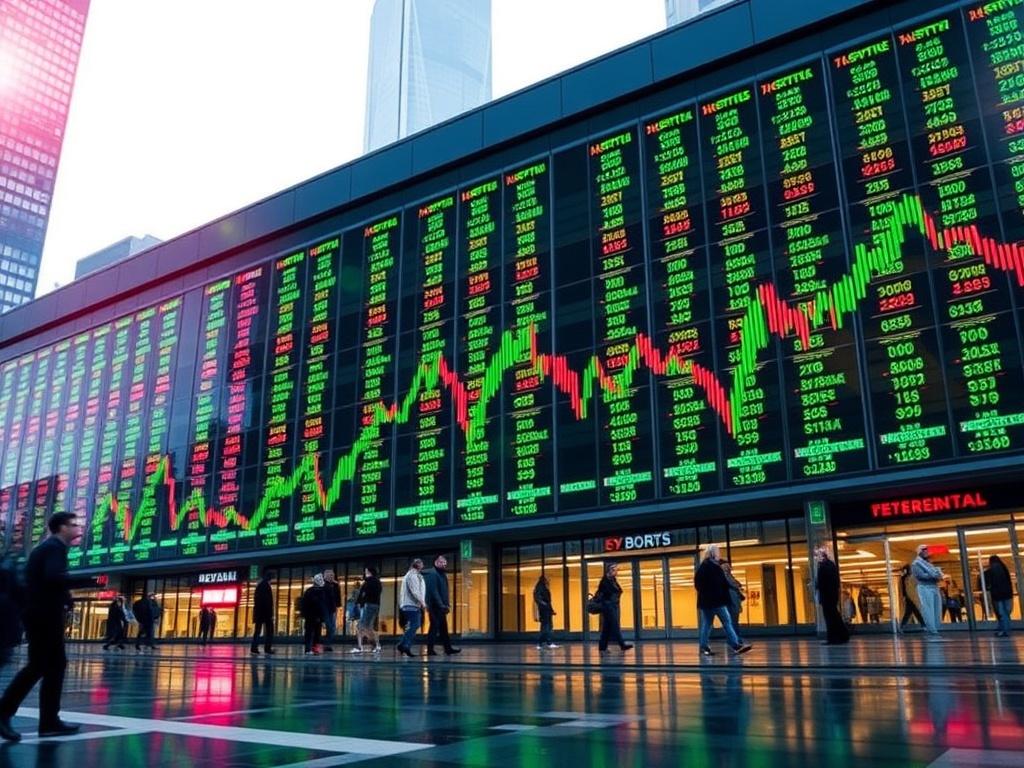
Financial market alert: what you need to know today
Read Time:4 Minute, 48 Second
Markets are sending signals right now that deserve a clear read, whether you manage a retirement account or watch the tape from your kitchen table. This Financial Market Alert: What You Need to Know Today gives you the concise, practical view—what moved, why it matters, and what you might reasonably do next. I’ll highlight the indicators traders are watching, the sectors under stress, and a few concrete steps you can take without overreacting. Read on for a calm, actionable take that doesn’t require jargon to follow.
Why markets are moving now
First, the Federal Reserve’s tone and inflation readings remain primary drivers for asset prices. When the Fed hints at a slower path for rate cuts or stronger data arrives, rates tend to rise and growth stocks react negatively; the opposite is true when inflation cools or the Fed signals accommodation. Add to that a patchwork of earnings surprises and geopolitical headlines, and you get the two-way volatility we’ve seen intraday.
Liquidity and positioning also amplify moves: hedge funds and algorithmic traders can push prices further when everyone tries to exit or enter the same trade at once. Volume spikes around macro prints or Central Bank statements, which means small news can produce outsized price reactions. That’s why paying attention to context—who is driving the flow and why—matters as much as the headline itself.
Key indicators to watch
There are a handful of metrics that quickly tell you whether the market is in risk-on or risk-off mode. Treasury yields, the VIX (volatility index), dollar strength, and credit spreads together create a snapshot of investor appetite. Watching these in combination gives clearer information than any single number on its own.
| Indicator | What it signals | Why it matters |
|---|---|---|
| 10-year Treasury yield | Real-time interest-rate expectations | Influences discount rates, mortgage costs, and equity valuations |
| VIX | Expectations of near-term volatility | Higher VIX often coincides with market sell-offs and flight to safety |
| Dollar index (DXY) | Global funding and commodity pressure | Strong dollar can pressure emerging markets and commodity prices |
Sectors and assets under pressure or opportunity
Not every market move affects all sectors equally. Growth and technology stocks typically suffer when yields rise because future earnings are discounted more heavily. Conversely, financials can benefit from steeper yield curves, and energy responds to commodity price moves tied to geopolitical developments.
Defensive assets such as investment-grade bonds and high-quality dividend payers often gain attention during risk-off spells, while gold and cash become attractive to some investors seeking stability. On the other hand, traders sometimes find opportunities in beaten-down cyclicals if the economic data begins to stabilize; timing and risk tolerance matter more than conviction alone.
What investors should do right away
If you’re receiving an alert and feeling the urge to act, start with a quick diagnostic rather than a rash decision. Check whether the move is driven by structural news—like a policy change—or by temporary headlines that typically reverse. Ask whether your investment horizon and objectives align with reacting to short-term volatility or staying the course.
- Verify the catalyst: policy, earnings, or geopolitics?
- Assess impact on your core holdings rather than every small position.
- Trim size or rebalance incrementally; avoid market-timing bets.
- Use limit orders and plan re-entry points to avoid chasing prices.
- Document your trade rationale to prevent emotion-based follow-ups.
Small, deliberate adjustments usually beat dramatic reallocations made under pressure. For many long-term investors, rebalancing to target weights and taking advantage of temporary weakness with dollar-cost averaging preserves discipline without chasing headlines. Traders with shorter horizons should size positions carefully and use stops to control losses.
Real-life example and personal note
When the Fed surprised markets a couple of years ago by leaning more hawkish, I reduced exposure to high-multiple growth positions and increased cash-equivalents for about six weeks. That brief repositioning avoided a chunk of temporary drawdown and allowed me to redeploy into select names at lower prices. The move was modest, deliberate, and based on risk-management, not panic.
That experience reinforced a simple rule: alerts should trigger assessment, not automatic selling. Having a written playbook — thresholds for selling, rebalance rules, and pre-determined allocation bands — removes emotion from the process and preserves optionality when volatility creates opportunities.
Practical tools and sources for live alerts
Use a mix of sources for real-time context: official releases (BLS, Fed), reliable market data terminals or platforms, and a couple of trusted news services for quick summaries. Set up tiered alerts—one for major macro prints, another for moves in your core holdings, and a discretionary channel for geopolitical shocks that require nuance. Too many pings create noise, so tune alerts to your strategy and tolerance.
For DIY investors, platforms that offer streaming yields, credit spread monitors, and simple dashboards for your portfolio can be lifesavers on volatile days. Professionals will add flow indicators and order-book depth, but most individual investors only need a clear picture of yield moves, volatility spikes, and sector rotations to act sensibly.
Staying prepared without overreacting
Alerts are useful—they are designed to grab your attention—but your most valuable tool is a clear plan. Define what kinds of alerts require immediate action versus those that warrant monitoring, and keep your position sizes aligned with your risk tolerance. Preparing this plan in calm markets means you won’t write it under pressure when the next headline arrives.
Markets will continue to surprise; that’s the only certainty. If you combine a steady process with selective attention to the indicators and sectors described above, you will be ready to respond intelligently when the next financial market alert arrives.


Happy
0 %

Sad
0 %

Excited
0 %

Sleepy
0 %

Angry
0 %

Surprise
0 %
 0
0
 0
0